
9 Essentials of Steward Leadership Development for Engaged Teams
 (c) 2021 Full Sail Leadership Academy
Today, the term “steward” refers to someone called to look after the passengers aboard a ship – a caretaker.
I’ve found that steward leadership results in engaged teams who are invested in the organization’s mission, vision, and values.
Unfortunately, this concept is challenging to grasp. Leaders tend to assume a controlling role over their employees as if workers are a form of capital to be shaped as the company desires.
“I pay these people a good wage; what else could they want from me?”
You can’t just throw money at disengaged teams and expect them to suddenly become productive. Studies show that 60% of workers will consider leaving a position if they feel their work isn’t captivating enough.
Steward leaders, on the other hand, invest in both their employees’ financial and emotional well-being.
Stewards care about the lives and hearts of their crew outside the office walls.
When workers feel valued and respected rather than alienated and reduced to a financial figure, an amazing synergy occurs: those team members become stewards of the organization’s mission, values, and vision.
What is Stewardship in Leadership Development?
In 2013, Julia Kukard, Kurt April, and Kai Peters published an important book called Steward Leadership: A Maturational Perspective under UCT Press.
According to the authors, steward leadership is:
“A form of leadership that focuses on others, the community, and society at large rather than the self.”
The authors explain that many senior leaders naturally adopt a stewardship leadership outlook as their careers mature.
Mature and experienced business leaders know you can’t force productivity out of people. They know a team needs to feel respect, compassion, and inclusion before they’ll engage wholeheartedly.
How Does Steward Leadership Differ from Servant Leadership?
In traditional leadership, the team serves the leader. Under servant leadership, the leader exists to serve the team members.
Steward leadership is different: a steward leader cares for the team members, the organization, and society as a whole. Their actions are undertaken in the interest of the organization’s growth and alignment with its mission, vision, and values.
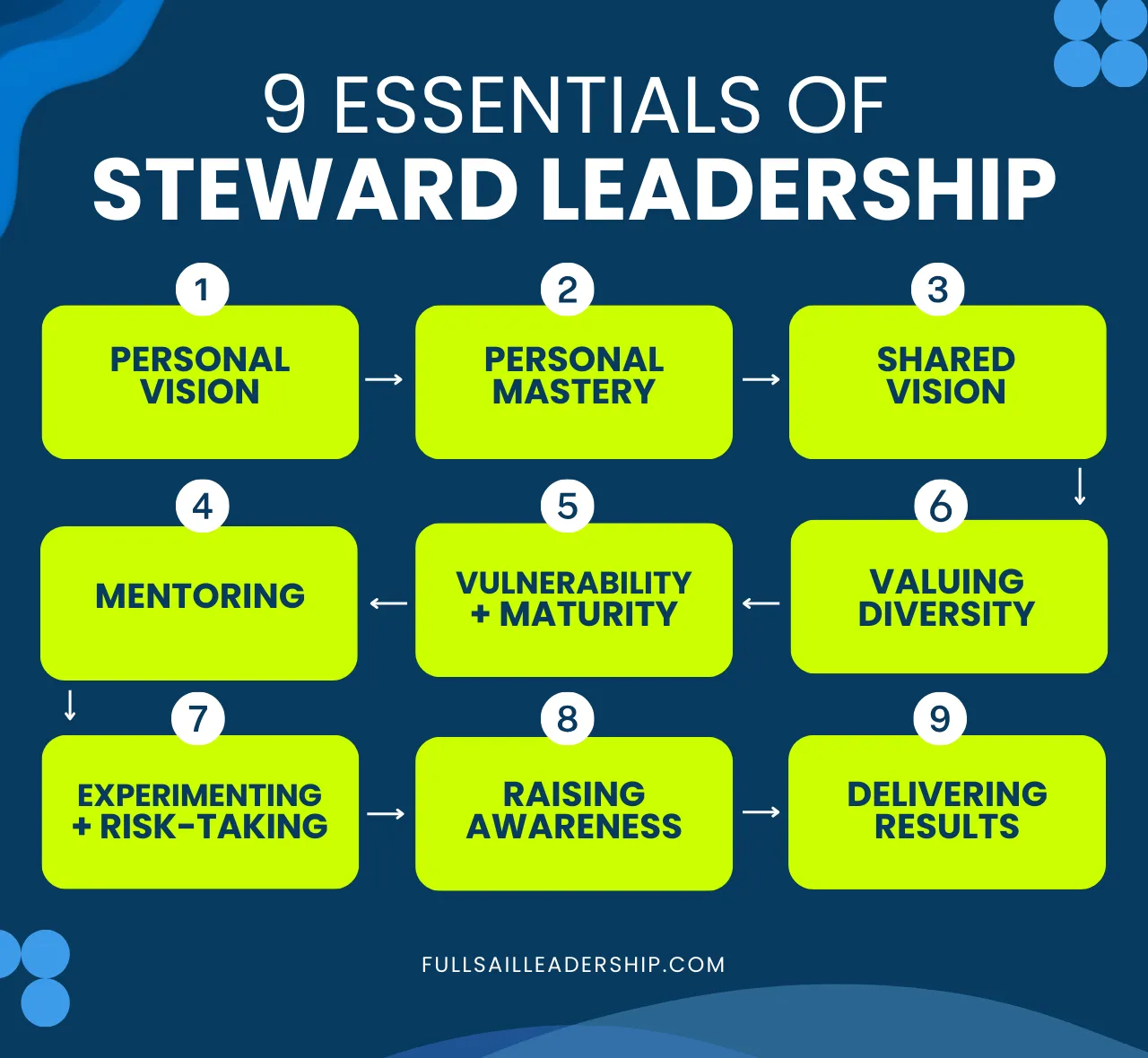
9 Essential Components of Stewardship in Business
Steward leadership is a discipline. Community building, responsibility, and trust within an organization all hinge on these nine components.
1. Personal Vision
A steward leader begins with a clear personal vision. It is a clear picture of the future they are working toward, shaping how they lead day-to-day.
This vision belongs to the leader first. It shapes priorities, decisions, and behavior, especially when pressure mounts. Leaders without personal vision tend to react to circumstances. Leaders with vision respond with intention.

2. Personal Mastery
Personal mastery is the discipline of emotional control and self-awareness.
Steward leaders understand that their reactions set the tone for the team. They work to manage stress, stay grounded, and grow into their best selves. This kind of self-leadership builds trust and stability, especially in challenging moments.
3. Shared Vision
While personal vision starts with the leader, stewardship requires forming a shared vision that includes everyone.
A shared vision invites team members into the future rather than assigning them roles within it. When people see how their work connects to a larger purpose, engagement becomes personal, and ownership follows.
4. Mentoring
Steward leaders invest time in people through one-on-one mentoring and coaching.
This is not about fixing problems. It is about helping others grow. Encouragement, honest feedback, and presence signal that development matters. Over time, mentoring produces leaders who are confident, capable, and ready to support others.
5. Vulnerability and Maturity
Being vulnerable in stewardship requires courage and transparency.
Steward leaders are honest about challenges, open to feedback, and willing to admit when they do not have all the answers. This kind of maturity builds trust without oversharing or creating instability. People feel safe when leaders are genuine.
6. Valuing Diversity
In steward leadership, everyone matters.
Valuing diversity means recognizing that different backgrounds, experiences, and perspectives strengthen the team. Steward leaders create environments where people are respected, heard, and included because healthy teams require more than uniform thinking.
7. Experimentation and Risk-Taking
Stewardship encourages thoughtful experimentation and appropriate risk-taking.
When leaders create space for leaders to try, fail, and learn, they foster psychological safety. Teams become more engaged when growth is expected, and mistakes are treated as opportunities for learning rather than as punishment.
8. Raising Awareness
Raising awareness means helping people see themselves, others, and the organization more clearly.
Steward leaders invite reflection. They ask thoughtful questions, surface blind spots, and help teams understand how actions affect others. Increased awareness leads to better decisions, stronger relationships, and a healthier culture.
9. Delivering Results
Delivering results is the outcome of steward leadership.
Highly effective teams achieve results because trust is strong, expectations are clear, and people are invested. Steward leaders understand that caring for people and producing results are not competing priorities. Each depends on the other.
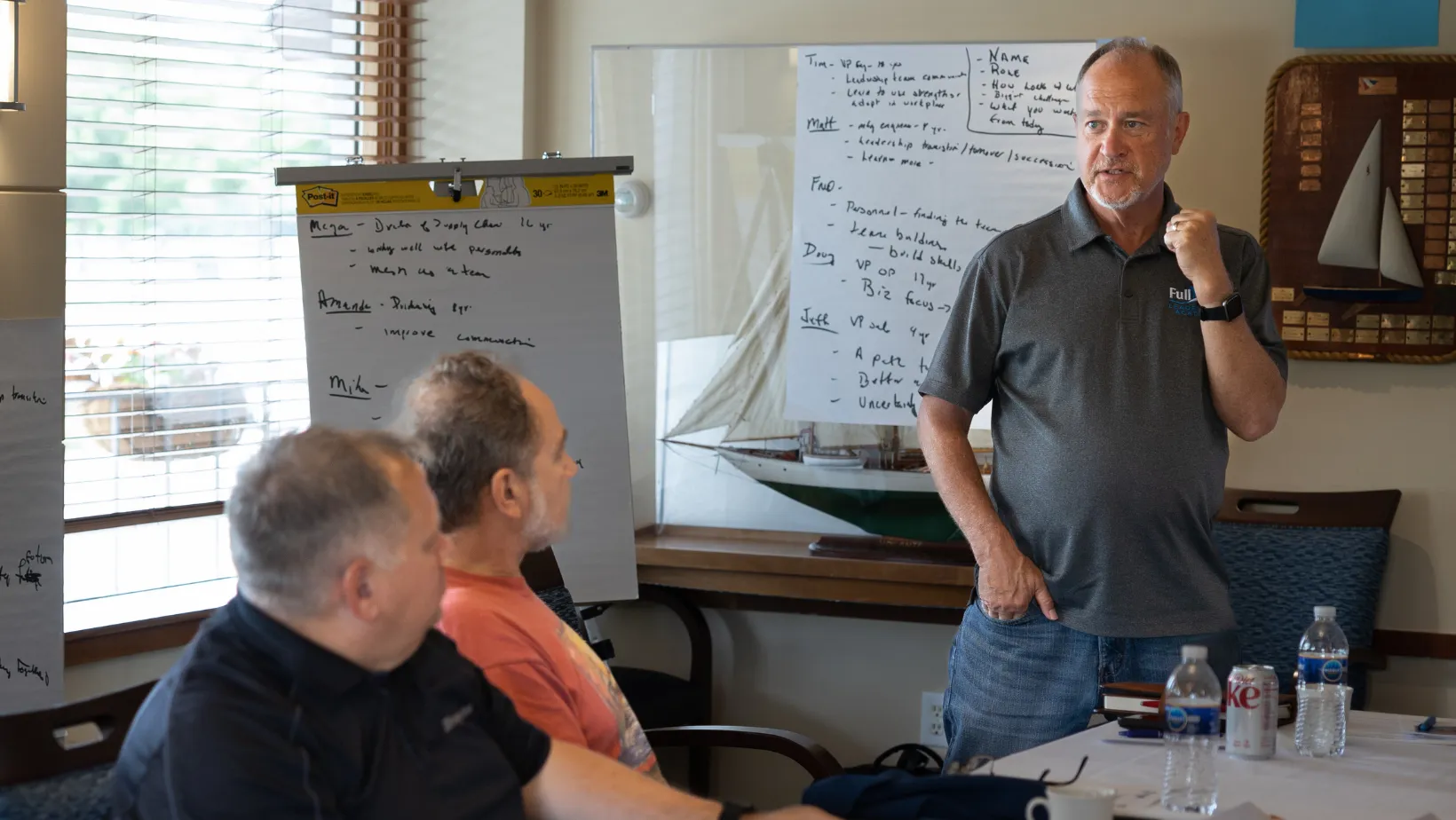
Applying Steward Leadership in Stormy Weather
John F. Kennedy once said, “Ask not what your country can do for you, but what you can do for your country.”
When routines are disrupted and stress levels rise, people look to leadership for stability, care, and clarity. These are the moments when steward leadership matters most, not because conditions are ideal, but because they aren’t.
A steward leader asks what they can do for their company, especially in times of uncertainty and disruption.
In recent years, we’ve seen companies do extraordinary things to care for their people during demanding and uncertain seasons:
- Embracing pets and children in the workplace
- Sending pints of gourmet ice cream and essentials
- $250 Amazon gift cards
- Asking team members to introduce their kids or pets during Zoom meetings
You can bet the companies that have adopted steward leadership principles like these will emerge from this crisis in much stronger positions than others.
Here are a few examples of ways companies have risen to the challenge of stewardship during today’s trying times.
Incorporating Families
Goodway Group hosted a half-hour “Family Fun Friday” event so employees could introduce their children. Jillian Gap, Goodway Group’s People Experience Director, said it included “music, magic, and laughs.”
Everyone could use a lighthearted break, especially taxed working parents.
Other companies, such as F&B NY, The Media Kitchen, and PubMatic, also tried to lighten the mood by encouraging teams to bring kids, pets, or a glass of wine to lunches or meetings.
Wellness Programs
Salesforce made major strides toward employee well-being by launching a series of programs and initiatives. The Thriving Mind benefits program provides mental and emotional health resources for employees and their families.
Meanwhile, the B-Well Together twice-daily broadcast connects industry luminaries with their employees to discuss wellbeing.
Salesforce also made Plum Village’s Zen Meditation App available to all its workers through the Salesforce App Catalog.
Material Support
People can’t concentrate on work when their basic needs aren’t met. During periods of intense strain and uncertainty, Salesforce and many other enterprises launched employee assistance programs to help employees move out of survival mode.
It’s never been more obvious that every team member faces a different reality and struggles. Steward leaders know that not every worker needs the same level of support. That’s why you see companies like Salesforce jump into prioritizing conversations and connections.
Stewardship Impacts All of Society – Not Just the Company
Steward leadership begins in the heart.
People don’t change because they’re told to—they change because they choose to. The same is true in leadership. When leaders commit to empathy, responsibility, and genuine care for the people they serve, trust grows, engagement follows, and teams begin to take ownership of the mission.
If you’re ready to lead as a steward and build a team that’s invested in more than just a paycheck, Full Sail Leadership Academy is here to help you chart that course.
Contact us today to become the steward your team needs.
 (c) 2021 Full Sail Leadership Academy
 (c) 2021 Full Sail Leadership Academy
 (c) 2020 Full Sail Leadership Academy
 (c) 2021 Full Sail Leadership Academy